Modern Art Movements: Styles, Artists and Key Ideas
Modern art movements are a succession of artistic experiments that challenged academic rules from the 1830s through the middle of the twentieth century. This guide presents nine essential movements, their dates, characteristics and key artists.
- Realism: modern art turns to everyday life
- Impressionism: light, colour and fleeting sensations
- Fauvism: colour freed from reality
- Expressionism: representing an unsettled world
- Cubism: objects seen from several viewpoints
- Futurism: an ode to modernity and speed
- Bauhaus: art, craft and industry brought together
- Surrealism: dreams and the unconscious
- Lyrical abstraction: colour and gesture as a pure language
- Frequently asked questions
Realism: modern art turns to everyday life
Realism is one of the key movements that shaped modern art and its break with academic conventions.
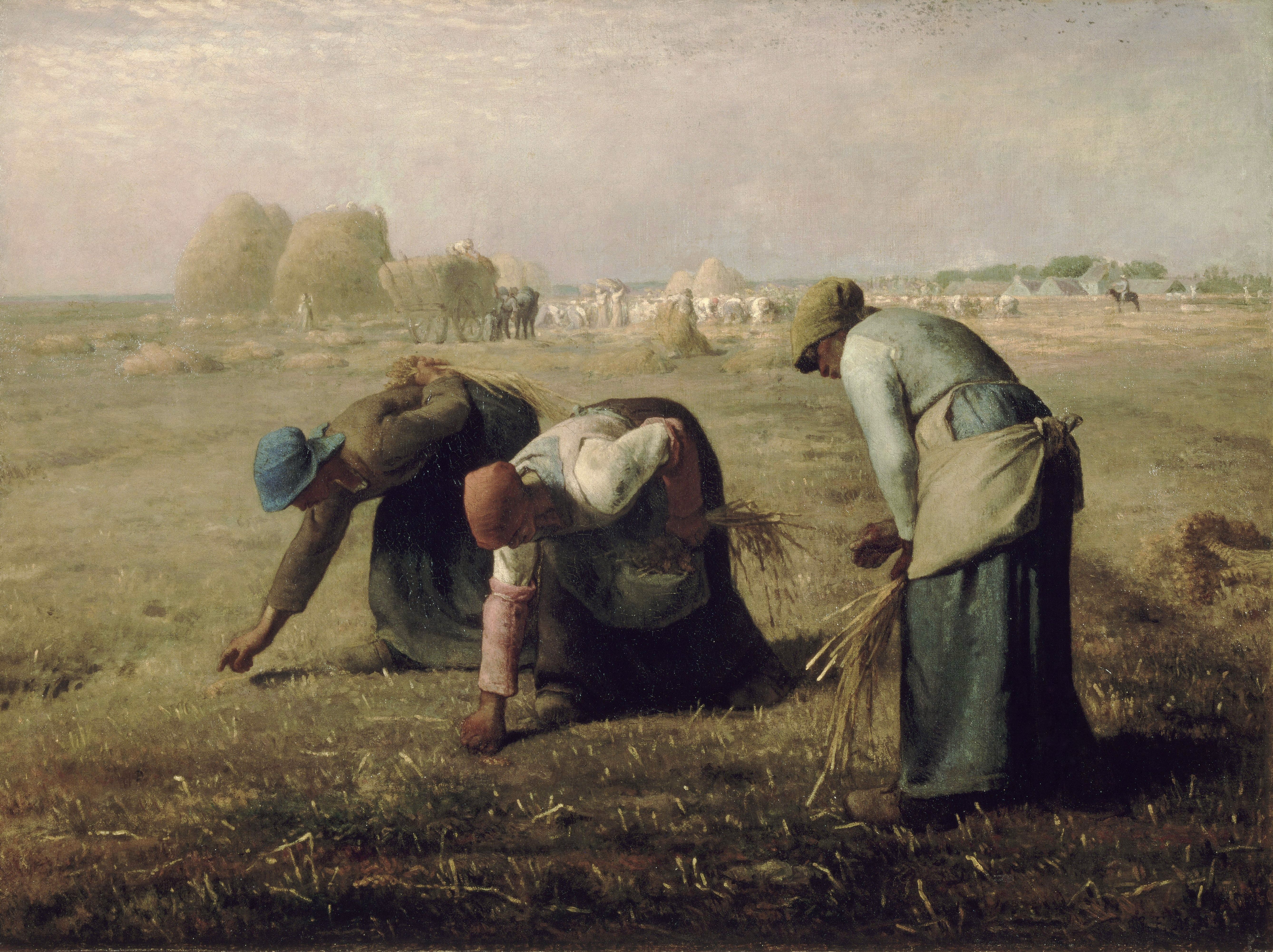
Realism marked the first major break with academic art around the 1830s. Tired of the mythological and heroic subjects promoted by the academies, artists began to represent everyday life: farm workers, laborers and urban crowds. The style sought fidelity to reality without idealization. Natural tones and direct light reinforced this new attention to the visible world. Important artists include Gustave Courbet, Jean-François Millet, Honoré Daumier and Édouard Manet.
Impressionism: light, colour and fleeting sensations
Impressionism is one of the key movements that shaped modern art and its break with academic conventions.
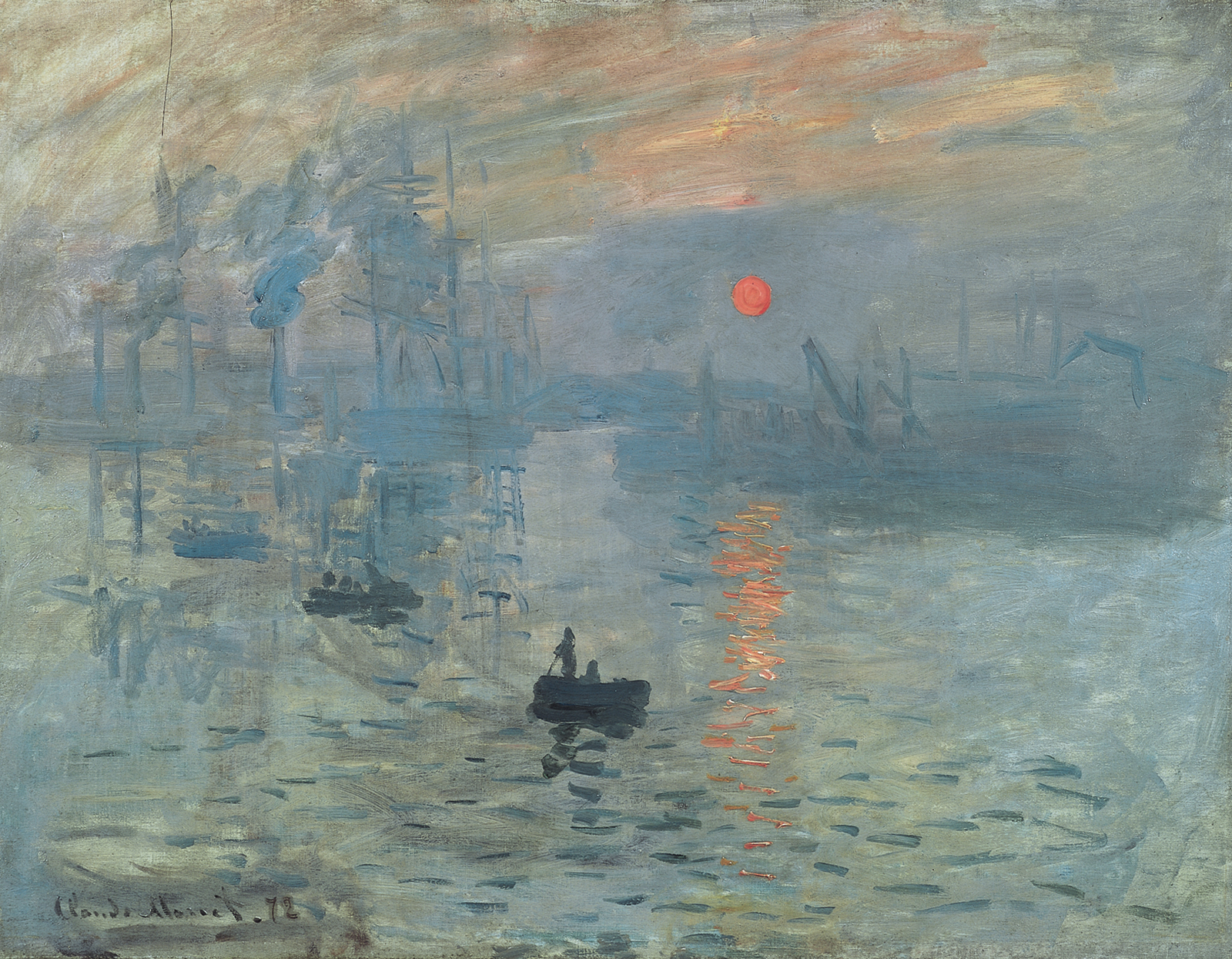
Born in France between 1874 and 1886, Impressionism was the first movement to claim free composition and fleeting impressions as artistic subjects. The invention of tube paint allowed artists to work outdoors and capture light with quick touches of colour. Visible brushstrokes, bright palettes and changing light became its defining features. Important artists include Claude Monet, Edgar Degas, Berthe Morisot and Camille Pissarro.
Fauvism: colour freed from reality
Fauvism is one of the key movements that shaped modern art and its break with academic conventions.

Fauvism made pure red, yellow and blue explode across the canvas. At the 1905 Salon d’Automne in Paris, critic Louis Vauxcelles called the painters Fauves, or wild beasts. Fauvist artists simplified forms and stopped treating colour as a faithful description of reality. Colour became the primary tool for expressing emotion. Henri Matisse, Maurice de Vlaminck, André Derain and Raoul Dufy are key figures.
Expressionism: representing an unsettled world
Expressionism is one of the key movements that shaped modern art and its break with academic conventions.

At the beginning of the twentieth century, Expressionism reflected the anxiety of an entire era. Artists no longer tried to represent the world as it looked, but as it felt. Strong contrasts, distorted forms and intense compositions conveyed inner experience. The movement developed notably in Germany through groups such as Die Brücke in Dresden and Der Blaue Reiter in Munich. Important artists include Edvard Munch, Vassily Kandinsky, Ernst Ludwig Kirchner, Paul Klee, Egon Schiele, Otto Dix and Franz Marc.
Cubism: objects seen from several viewpoints
Cubism is one of the key movements that shaped modern art and its break with academic conventions.
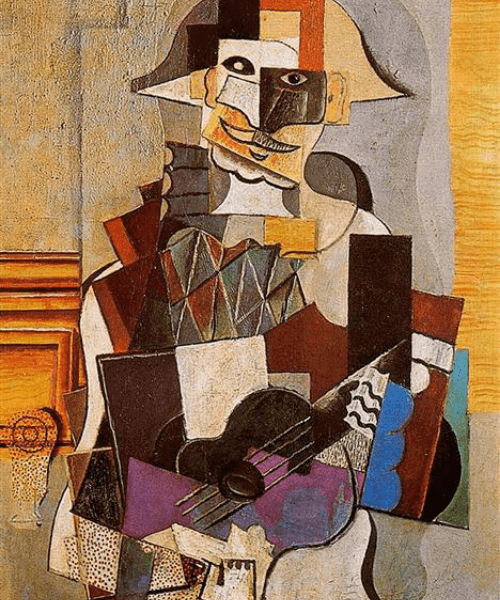
Cubism introduced a radical new visual language. Objects and figures were broken apart and represented through several simultaneous facets, challenging traditional depth and perspective. Influenced by Paul Cézanne and African art, Cubism helped open the way to abstraction. Analytical Cubism used decomposed, restrained forms, while Synthetic Cubism introduced colour, collage and materials. Pablo Picasso’s Les Demoiselles d’Avignon, created in 1907, is a decisive landmark. Georges Braque, Juan Gris and Fernand Léger are also central figures.
Futurism: an ode to modernity and speed
Futurism is one of the key movements that shaped modern art and its break with academic conventions.

Born in Italy with Filippo Marinetti’s Futurist Manifesto in 1909, Futurism celebrated technology, speed and the energy of the industrial city. Artists drew on transport, machines and mechanical movement. Geometric forms were fragmented and layered to suggest dynamism. The images appear active, vibrant and almost kinetic. Umberto Boccioni, Gino Severini, Giacomo Balla and Carlo Carrà are among its key artists.
Bauhaus: art, craft and industry brought together
Bauhaus is one of the key movements that shaped modern art and its break with academic conventions.

Founded by architect Walter Gropius in Weimar in 1919, the Bauhaus transformed the relationship between art, craft and industry. Its ambition was to bring fine arts such as painting and sculpture into dialogue with furniture, textiles, typography and architecture. Clean forms, functionality and beauty in everyday objects became central principles of modern design. Closed by the Nazi regime in 1933, the school continues to influence architecture and applied arts. Its notable teachers included Vassily Kandinsky, Paul Klee, László Moholy-Nagy and Oskar Schlemmer.
Surrealism: dreams and the unconscious
Surrealism is one of the key movements that shaped modern art and its break with academic conventions.
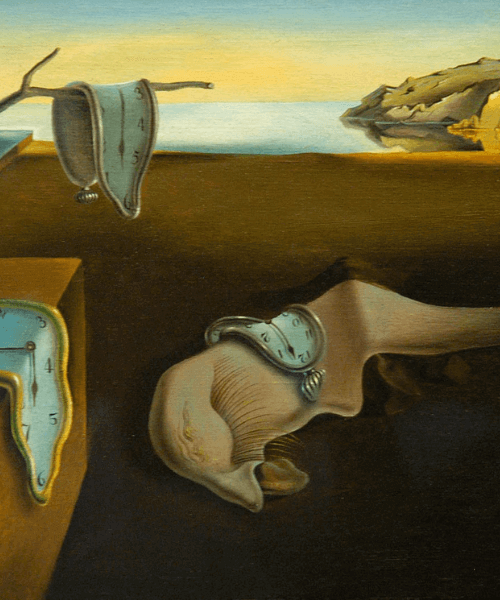
Founded in 1924 by writer André Breton, Surrealism abolished the boundary between dreams and reality. The movement drew on the unconscious and automatic creation to produce unsettling and poetic works. Everyday objects were diverted from their usual purpose, and reality was staged in absurd or dreamlike ways. Automatic writing and dream imagery allowed artists to let the unconscious guide the creative act. Salvador Dalí, René Magritte, Max Ernst, Man Ray, Marcel Duchamp and Joan Miró are among its best-known figures.
Lyrical abstraction: colour and gesture as a pure language
Lyrical abstraction is one of the key movements that shaped modern art and its break with academic conventions.

Lyrical abstraction moved away from visible subjects and made colour, gesture and emotion its central themes. The artwork emerged from the painter’s movement and the physical act of painting itself. In Europe, the movement developed around the École de Paris in the 1940s and 1950s; in the United States, related practices became known as Abstract Expressionism, with artists such as Jackson Pollock and Mark Rothko. Unlike geometric abstraction, lyrical abstraction is spontaneous, emotional and gestural. Vassily Kandinsky, Nicolas de Staël, Pierre Soulages, Hans Hartung, Jackson Pollock and Mark Rothko are important references.
Choose an artwork that speaks to you
Explore unique and certified artworks inspired by a wide range of artistic traditions, created by more than 500 artists.
Choose an artworkFrequently asked questions about modern art movements
Modern art movements become easier to understand when their dates, ideas, techniques and artists are compared.
What are the main modern art movements?
Major movements include Realism, Impressionism, Fauvism, Expressionism, Cubism, Futurism, Bauhaus, Surrealism and lyrical abstraction.
What was the first modern art movement?
Realism, which emerged around the 1830s, is often considered the first major modern art movement because it broke with academic and heroic subjects.
What do modern art movements have in common?
They share a desire to break with academic rules and rethink colour, form, space, subject matter and the relationship between art and modern life.
When does modern art end?
Modern art is generally considered to end in the 1950s or 1960s, when Pop Art, Minimalism and other new approaches begin to shape contemporary art.
Which modern movement most influenced contemporary art?
Cubism and Surrealism had a particularly strong influence, but abstraction, Bauhaus and Expressionism also shaped many later practices.
Continue with the guides relevant to choosing and displaying art.