
How Much Does an Artwork Cost? Price and Value Explained
Are you wondering how much an artwork costs before buying a painting or sculpture? Have you inherited a work and want to estimate its value? The price of an artwork depends on the artist, technique, format, condition, rarity, market context and selling channel. This guide explains what shapes the price and how to compare information.
Quick definition: the price of an artwork is the amount requested or paid for a specific work at a given time and through a given sales channel. It is influenced by the artist’s market standing, the work’s characteristics, comparable sales and the services included in the transaction. It is not a fixed number.
What is the price of an artwork?
The price of an artwork is the amount attached to a specific painting, sculpture, drawing or other creation in a particular transaction. It depends on the artist, work, condition, provenance, market context, selling channel and services included.
Unlike an industrial product, an artwork is not priced only through production cost or practical utility. Its price reflects a combination of artistic, historical, material and economic factors.
The price of a work should also be distinguished from the artist’s general market standing. In French art-market vocabulary, the word cote refers to an artist’s overall price indicator. It can provide context, but it does not replace the specific evaluation of one artwork.
Two paintings by the same artist can have very different prices depending on their format, subject, condition, period of creation, provenance and demand. A recent gallery price, a completed auction result and an online asking price are not automatically comparable.
Price, market standing and artwork value: what is the difference?
Artist market standing is a broad indicator based on the artist’s history of sales, recognition and demand. The value of a specific artwork is a focused assessment that also considers format, subject, condition, period, provenance, technique and rarity. The final price can be above or below the artist’s average.
For example, an artist with a stable average price may see an iconic subject or exceptional large-format work attract much stronger demand, while a minor or damaged work may sell for less. The average is a reference point, not a promise.
Important: auction databases may display a hammer price, while the buyer may also pay buyer’s fees, taxes, shipping or other charges depending on the country and sale conditions. Gallery prices in the first market are formed differently from auction results in the second market.
The 7 criteria that affect the price of an artwork
The price of an artwork is shaped by seven main criteria: artist recognition, completed sales, technique and materials, format and subject, condition and provenance, rarity and market demand. These factors interact rather than following one universal formula.
An artwork price develops over time through the relationship between the work, the artist and the market. The following criteria help explain why two apparently similar works may not have the same price.
Career history, exhibitions, institutional recognition, representation and collector demand can influence how the market perceives an artist.
Past results from auctions, galleries and other documented transactions provide useful comparisons. A listed price is not the same as a completed sale.
Oil, acrylic, watercolor, sculpture, printmaking and mixed media have different production methods, conservation needs and market histories.
Size, complexity, subject, series and period can make one work more sought after than another by the same artist.
Condition, restoration, ownership history, exhibition history and supporting documents contribute to buyer confidence and value.
A limited number of available works can increase demand, while a coherent and recognisable practice helps the market understand an artist’s production.
Styles and movements can experience periods of enthusiasm. Demand may raise prices independently of a work’s intrinsic artistic quality.
A gallery, dealer, auction, fair or online platform offers different services, audiences, fees, visibility and buyer protections.
Price is not the only measure of a successful purchase. The work’s meaning and the connection it creates with the buyer also matter.
How to research an artwork price for free
To research an artwork price for free, compare recent auction results, gallery prices and specialist databases, then check the artist, technique, format, condition and provenance. For an artist with little public sales history, ask a reputable gallery, auction house or expert for an initial opinion.
Use several sources rather than relying on one database. Look for completed sales and comparable works by the same artist, then adjust the comparison for size, medium, condition and provenance.
- Artprice — international auction database with partial free access
- Artnet — market data and sales histories for many artists
- Invaluable — auction records and sale information
- Christie’s and Sotheby’s — published estimates and selected results
- Gallery prices — useful for the first market and living artists
Artprice and Artnet
Useful for comparing auction history, artist names, periods, media and price ranges. Full access may require a subscription, so check what the displayed result includes.
Auction-house results
Major auction houses publish estimates and completed results. Check the sale date, currency, buyer fees, condition information and whether the work is genuinely comparable.
Gallery research
Gallery prices help understand the first market, especially for living contemporary artists who may have limited auction history.
Independent opinion
For an inherited, rare or valuable work, an independent qualified expert can explain the method, scope and date of an estimate.
For an artist without an established market history, do not pay an organisation simply to create a supposed official rating. An artist’s market standing is built through real sales, recognition and demand, not through a paid certificate with no recognised market value.
The price of a living contemporary artist
The price of a living contemporary artist’s work is usually built first through the primary market: the artist’s studio, gallery network and direct sales. Auction history may develop later, but gallery prices, career recognition, production and demand are already important.
For a living artist, the price depends less on long auction records than on the network of galleries representing the artist and the prices used in the first market. It can take years for a consistent secondary-market history to develop.
- The price level and reputation of the galleries that represent the artist
- The number and regularity of works sold
- Institutional recognition, public collections, residencies and awards
- The coherence and development of the artistic practice
- The relationship between supply, demand and available formats
Buying through a gallery means buying in the first market: the work comes directly from the artist’s studio or representative network, at a price set within that relationship. It can be a more accessible way to support an artist early in their career than competing for a scarce work at auction.
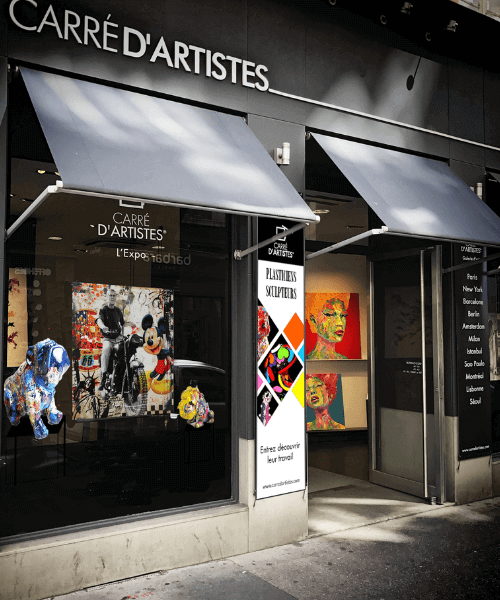
At Carré d’artistes, original paintings and sculptures are selected from a network of 500 artists. Founded in 2001, the company follows a fair-price policy designed to reward artists fairly while keeping art accessible. Depending on the work and format, discovering original art can feel closer to the price of a train ticket or a hotel night than to an unreachable luxury purchase. Explore the available artworks →
Find an artwork within your budget
Compare artists, techniques, formats and subjects, then choose a work that speaks to you and fits your budget. The right purchase is not necessarily the most expensive one.
Discover the artworksFrequently asked questions about artwork prices
The price of an artwork should be read in context: artist, work, market, selling channel, documents and services. These answers cover the most common questions before buying, valuing, insuring or reselling a work.
How much does an artwork cost?
There is no single price for an artwork. The amount depends on the artist, technique, format, materials, condition, provenance, rarity, demand, selling channel and services included in the purchase.
Why are some artworks more expensive than others?
Artist recognition, technique, size, subject, materials, uniqueness, condition, provenance and current market demand can all affect an artwork’s price. Different selling channels also include different services and costs.
Does a higher price guarantee better art?
No. Price is not a universal measure of artistic quality or personal meaning. Choose a work that speaks to you, is properly documented and fits your budget.
How can I estimate the value of an artwork?
Compare completed sales and gallery prices, then consider the artist, technique, format, condition, provenance and rarity. For an inherited or valuable work, ask a qualified expert for an independent estimate.
Can I buy original art at an accessible price?
Yes. Different artists, formats and techniques make it possible to start a collection within a comfortable budget. A fair price should reward the artist while keeping original art accessible to the buyer.
What should I check before paying for an artwork?
Check the exact artist and artwork, dimensions, technique, condition, signature, certificate, invoice, delivery, insurance and returns. Keep all documents with the work.
Continue exploring
Practical guides
Resources to help you compare galleries and choose your first artwork.