What Is Modern Art? Definition, Dates and Movements
Modern art generally refers to the artistic period from around 1860 to 1960, before contemporary art developed from the 1960s onward. It includes movements that challenged academic conventions and transformed how artists used form, color, subject and materials.
Modern art is the art of a historical period that preceded contemporary art. It is commonly associated with artistic experimentation from the late nineteenth century to the mid-twentieth century, including Impressionism, Cubism, Fauvism, Expressionism, Surrealism and abstraction.
Definition of modern art
Modern art is the art of a period in which artists broke with academic rules and searched for new ways to represent the world. It is not one style, but a succession of movements that changed the roles of color, perspective, subject, materials and the artist.
Modern art is best understood through the historical context in which it developed. Industrialisation, urban growth, new technologies, social change and international exchange transformed both daily life and artistic practice.
The period includes works that remain figurative as well as works that move towards abstraction. What connects them is the desire to challenge inherited conventions and to create a more direct relationship between artistic practice and modern life.
For a detailed comparison with the following period, read the difference between modern and contemporary art.
When does modern art begin and end?
The modern art period is commonly placed between the late 1800s and the mid-twentieth century, with around 1860 as a useful starting point and 1960 as a useful boundary with contemporary art. Exact dates vary by movement and art historian.
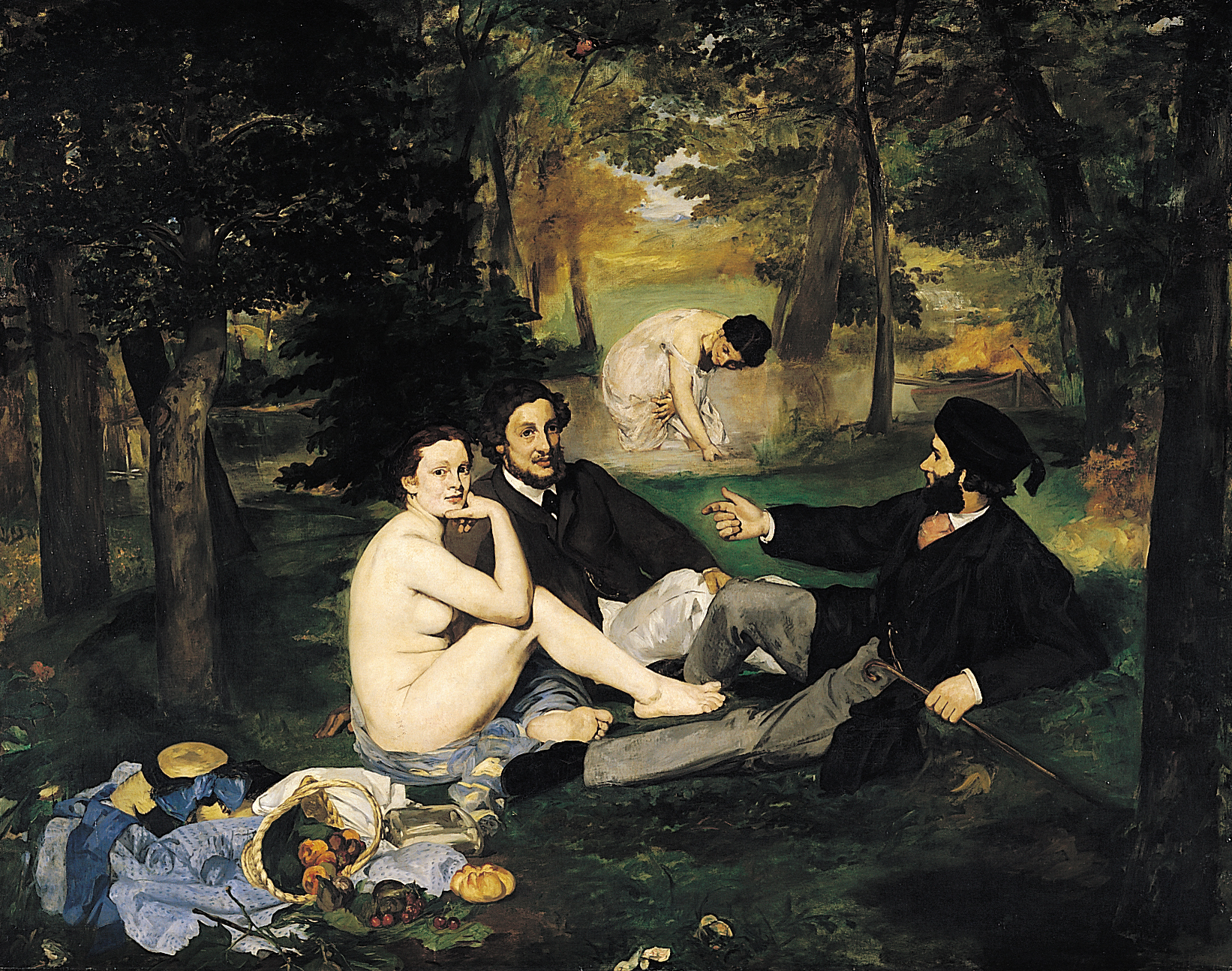
There is no single official start date for modern art. Around 1860, the rise of Realism and Impressionism challenged academic painting, while Manet and other artists represented modern urban life in new ways.
The period gradually developed through Post-Impressionism, Fauvism, Expressionism, Cubism, Surrealism and abstraction. Around the 1960s, pop art, conceptual art and new media marked a shift towards contemporary art.
The origins of modern art
The origins of modern art lie in the nineteenth century, when artists challenged academic hierarchies, painted contemporary life and experimented with new ways of seeing. Industrialisation, photography, urbanisation and changing audiences all contributed to the break.
The age of modernity
The rise of cities and industry transformed everyday life. Railways, department stores, newspapers, advertising and new forms of entertainment created subjects that had rarely appeared in traditional painting.
Artists began to paint what they saw around them: streets, cafes, theatres, stations, workers and leisure. They also questioned the hierarchy that placed historical, religious and mythological subjects above ordinary life.
The invention of photography encouraged painters to explore what the camera could not capture in the same way: color, sensation, gesture, memory and the subjective experience of a moment.
Characteristics of modern art
The main characteristics of modern art are a break with academic codes, attention to modern life, new uses of color, experimentation with form and perspective, and the development of new techniques and media.
Modern themes and subjects
Modern artists moved beyond traditional subjects and represented contemporary life: urban spaces, leisure, work, politics, the body, new technologies and changing social identities.
The artist no longer had to idealise the world. Everyday people and ordinary scenes became worthy of serious artistic attention.
An unprecedented use of color
Color became independent from the strict imitation of nature. Impressionists used separated touches of color to represent light, while Fauvist artists used pure, intense and sometimes non-natural colors to create emotional impact.
New forms and techniques
Modern artists experimented with cropping, unusual viewpoints, fragmented space, collage, collage materials, visible brushwork and simplified forms. The canvas became a place for research rather than a window that simply reproduces reality.
Painting remained central, but sculpture, printmaking, collage and other practices also developed rapidly. These experiments prepared the way for contemporary art’s much wider range of media.
The main modern art movements
Modern art movements include Realism, Impressionism, Post-Impressionism, Fauvism, Expressionism, Cubism, Futurism, Dada, Surrealism and abstraction. Each movement responds differently to academic traditions, modern life and the changing role of the artist.
Realism
Realism represents everyday life, workers and contemporary society without idealisation. It prepares the ground for modern art by making ordinary experience a legitimate subject.
Explore realistic paintingsImpressionism
Impressionism captures light, atmosphere and fleeting perception through visible brushwork and outdoor painting.
Explore Impressionist paintingsPost-Impressionism
Van Gogh, Gauguin and Cezanne move beyond the impression of a moment towards structure, expression, symbolism and personal color.
Fauvism
Fauvist painters use pure, vivid and non-natural colors to express sensation and emotion. Matisse is its best-known figure.
Read about FauvismExpressionism
Expressionism distorts forms and colors to communicate an inner state, anxiety or intense emotion.
Read about ExpressionismCubism
Cubism fragments reality into geometric planes and presents several viewpoints at the same time.
Read about CubismFuturism
Futurism celebrates speed, machines, movement and the energy of modern cities.
Dada
Dada rejects artistic conventions and uses chance, absurdity, collage and found objects to challenge institutions.
Surrealism
Surrealism explores dreams, the unconscious, chance and unexpected combinations beyond rational reality.
Explore Surrealist paintingsAbstraction
Abstract art leaves direct representation behind and organises color, line, form and rhythm as independent elements.
Explore abstract paintingsThese movements overlap and artists may belong to several tendencies. Read the complete guide to modern art movements for a deeper exploration.
Famous modern artists
Famous modern artists include Monet, Van Gogh, Degas, Caillebotte, Munch, Klimt, Picasso, Kahlo, Matisse, Manet, Magritte, Miro, Pollock and Soulages. Their practices are different, but all helped transform modern art.
Impressionism
Claude Monet, Edgar Degas and Gustave Caillebotte changed the representation of light, movement and urban life.
Monet tribute collectionPost-Impressionism
Vincent Van Gogh and Paul Cezanne used color and structure to move beyond the fleeting impression.
Van Gogh tribute collectionExpressionism
Edvard Munch and Egon Schiele made inner emotion, anxiety and the body visible through distortion.
Munch tribute collectionArt Nouveau
Gustav Klimt combined symbolic subjects, decorative patterns and intense surface treatments.
Klimt tribute collectionCubism
Pablo Picasso and Georges Braque transformed representation through fragmented planes and multiple viewpoints.
Picasso tribute collectionFauvism
Henri Matisse made pure color an independent force and pursued this research throughout his career.
Matisse tribute collectionSurrealism
Salvador Dali, Rene Magritte and Joan Miro explored dreams, symbols, the unconscious and unexpected images.
Dali tribute collectionAbstract art
Jackson Pollock, Pierre Soulages and Gerhard Richter explored gesture, matter, color and the limits of representation.
Pollock tribute collectionModern urban life
Edouard Manet helped open the path towards modern painting by treating contemporary life as a serious subject.
Manet tribute collectionModern art continues to inspire contemporary creators. At Carré d’artistes, contemporary artists explore abstraction, realism, color, urban life and many other approaches. Founded in 2001, Carré d’artistes represents 500 artists and follows a fair-price policy designed to reward artists fairly while keeping art accessible. Explore the available artworks →
Discover an artwork inspired by modern art
Impressionism, abstraction, Fauvism, Cubism or Surrealism? Find an original contemporary artwork inspired by the movements, colors and ideas of modern art.
Choose a modern artworkFrequently asked questions about modern art
Modern art is a historical period rather than a single style. These answers cover its dates, characteristics, movements, relationship with Art Nouveau and ways to discover or buy art inspired by it.
What is modern art in simple terms?
Modern art is the art of a period, broadly from around 1860 to 1960, when artists challenged academic conventions and developed new ways to use color, form, subject and materials. It includes Impressionism, Cubism, Fauvism, Expressionism, Surrealism and abstraction.
What are the dates of modern art?
Modern art is commonly associated with the late nineteenth century through the mid-twentieth century. Around 1860 is a useful starting point and around 1960 a useful boundary with contemporary art, although exact dates vary by movement.
What are the characteristics of modern art?
Modern art is characterised by a break with academic codes, attention to modern life, new uses of color, experimentation with form and perspective and the development of new techniques and media.
What is the difference between modern art and Art Nouveau?
Modern art is a broad historical period that includes many movements. Art Nouveau is a specific international movement around the turn of the twentieth century, known for organic lines, decorative patterns and the unity of art and design. Art Nouveau is therefore part of the wider modern-art context, not a synonym for modern art.
Can I buy paintings inspired by modern art?
Yes. Contemporary artists create original paintings and sculptures inspired by Impressionism, abstraction, Fauvism, Cubism and other modern movements. Explore the available artworks or read how to choose a modern artwork.
Continue exploring