
Famous Contemporary Artists: 10 Names and Key Works
Famous contemporary artists include influential painters, sculptors and multidisciplinary creators whose work has shaped visual culture since the 1960s. This guide presents 10 internationally recognized names, explains their artistic approaches and shows how to discover artists beyond market fame.
Takashi Murakami: Manga, Superflat and Global Pop Culture
Takashi Murakami is a Japanese contemporary artist known for the Superflat movement, smiling flowers, colorful characters and a dialogue between manga, consumer culture and fine art.
Murakami is one of the most recognizable contemporary artists of his generation. His work combines polished surfaces, bright colors and repeated motifs with an examination of how images circulate between Japanese popular culture, fashion and the international art market.

Murakami’s flowers and characters are immediately accessible, but their repetition also raises questions about merchandising, desire and the boundary between artistic creation and popular culture.
Banksy: Street Art, Mystery and Social Commentary
Banksy is an anonymous British street artist famous for stencilled images that combine humor, political criticism and social observation in public spaces.
Banksy has become one of the most famous contemporary artists because his work is designed to reach people outside museums and galleries. His interventions often respond to current events, war, borders, consumerism or inequality, while the anonymity of the artist adds a layer of mystery.
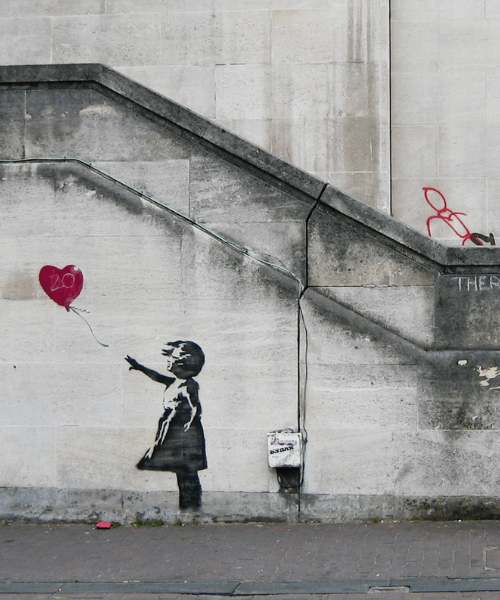
Banksy demonstrates how a contemporary artwork can circulate through a city, the press, social media and the art market at the same time. The context of an original work remains essential when assessing authenticity and ownership.
Jean-Michel Basquiat: From SAMO to Neo-Expressionist Painting
Jean-Michel Basquiat was an American artist whose raw symbols, fragmented texts and references to Black history transformed the language of neo-expressionist painting.
Basquiat began in the New York street-art scene under the name SAMO before entering major galleries. His paintings bring together words, anatomy, diagrams, cultural references and urgent marks. They are often discussed through questions of identity, power, race, history and the representation of Black experience in the art world.
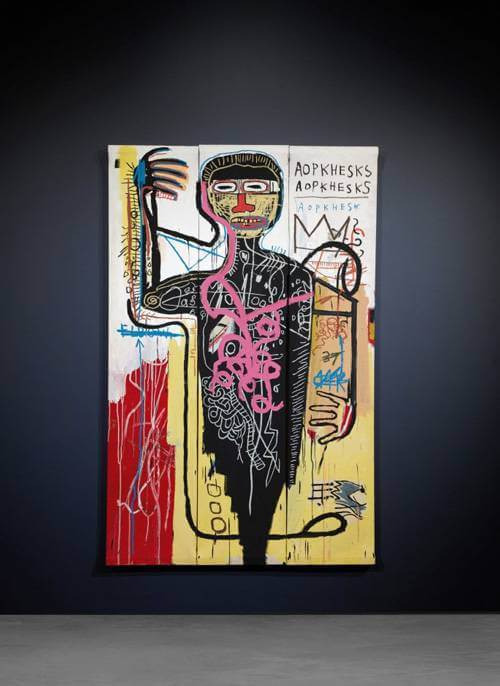
Basquiat’s influence extends far beyond a recognizable style. His work shows how a painting can carry historical references, personal experience and social critique without becoming a single fixed message.
Jeff Koons: Neo-Pop, Sculpture and the Language of Desire
Jeff Koons is an American contemporary artist known for highly polished sculptures inspired by toys, balloons, decorative objects and popular imagery.
Koons turns familiar objects into monumental or immaculate artworks. His sculptures can appear playful, luxurious and deliberately excessive, while also questioning how objects acquire desirability and value. His work is a useful entry point for understanding the relationship between contemporary art and consumer culture.
KAWS: Pop Art, Graffiti and Urban Culture
KAWS, the professional name of Brian Donnelly, developed a visual world around the Companion character, connecting graffiti, pop imagery, design, fashion and public sculpture.
KAWS’s work moves between gallery exhibitions, public spaces, fashion and collectible culture. Like Murakami and Koons, he shows how a contemporary artist can build a visual vocabulary that is recognized across different audiences without being reduced to a single medium.
Damien Hirst: Mortality, Science and Contemporary Art
Damien Hirst is a British contemporary artist whose work often examines death, science, medicine, collecting and the value assigned to objects.
Hirst became a leading figure of the Young British Artists in the 1990s. His installations and objects confront viewers with the tension between life and death, attraction and repulsion, scientific display and commercial presentation. His career also illustrates how exhibitions, galleries, collectors and media visibility interact.
Jenny Saville: The Body and the Possibilities of Painting
Jenny Saville is a British painter known for large-scale figurative works that examine bodies, flesh, identity and the physical force of paint.
Saville’s paintings use scale, distortion and dense brushwork to make the body impossible to treat as a neutral subject. Her work reminds viewers that contemporary painting can remain materially intense while addressing questions of representation, vulnerability and social expectations.
Peter Doig: Memory, Landscape and Figurative Painting
Peter Doig is a Scottish painter known for dreamlike landscapes and scenes that combine memory, atmosphere, solitude and ambiguous narratives.
Doig’s paintings often feel familiar and elusive at once. Landscape is not simply a record of a place; it becomes a space where memories, cultural references and invented scenes overlap. His work is a strong example of how contemporary artists can renew figurative painting without abandoning ambiguity.
Anselm Kiefer: History, Myth and Material
Anselm Kiefer is a German painter and sculptor whose monumental works explore memory, German history, mythology, spirituality and the material weight of the past.
Kiefer frequently works with materials that carry symbolic associations. Straw, ash, sand and lead can become part of the meaning of a work rather than a simple support. His practice shows why contemporary art cannot be separated from the physical experience of scale, texture and material.
JR: Public Art, Participation and Global Images
JR is a French artist known for monumental photographic installations in public spaces and participatory projects that connect portraiture, architecture and social experience.
JR brings art into streets, buildings and shared spaces. His projects invite participants to become part of the image, making the public an active contributor rather than a distant audience. Photography is mentioned here as part of the artist’s educational context; Carré d’artistes focuses on original paintings and sculptures in its product selection.
How to Discover Artists Beyond Famous Names
Use famous contemporary artists as a starting point, then compare lesser-known artists, techniques, subjects, biographies and original works to find a practice that genuinely speaks to you.
Fame is only one way to describe an artist’s position. Public recognition, institutional exhibitions, critical influence, collector demand and auction results measure different things, and they do not tell you whether a particular artwork is right for your home or collection.
- Read the artist’s biography and understand the context of the work.
- Look at several works rather than relying on one famous image.
- Compare technique, dimensions, materials, subject and condition.
- Check the certificate, invoice, delivery, insurance and return terms before buying.
- Explore emerging and represented artists through galleries, fairs and online directories.
Discover the contemporary artists represented by Carré d’artistes and compare original works selected for different tastes, spaces and budgets.
Buying a Contemporary Artwork Inspired by Famous Artists
When buying contemporary art, choose the artwork rather than the fame alone: check the artist, technique, dimensions, authenticity, price, delivery and your personal response before payment.
Some buyers want a work connected to a movement, visual language or artistic idea associated with a famous name. A thoughtful purchase does not need to reproduce a celebrated work. It can instead open a dialogue with street art, pop art, figurative painting, abstraction, material experimentation or social practice.
Market reminder: an artist’s fame does not guarantee the future value of every artwork. Auction records, public visibility and institutional recognition are useful context, but they should not replace a careful review of the specific work and its documents.
Find an original work for your own collection
Carré d’artistes has been presenting original, certified works since 2001, with a fair-price approach and a community of more than 500 artists.
Explore the artwork selectionFrequently Asked Questions About Famous Contemporary Artists
Famous contemporary artists are best understood through both their public recognition and their artistic contribution. The questions below clarify the most common points before discovering or buying contemporary art.
Who are the most famous contemporary artists?
Frequently cited names include Takashi Murakami, Banksy, Jean-Michel Basquiat, Jeff Koons, KAWS, Damien Hirst, Jenny Saville, Peter Doig, Anselm Kiefer and JR. The list changes according to whether you measure public fame, artistic influence, institutional recognition or market activity.
Are famous contemporary artists still alive?
Some are living artists and some belong to recent art history. Contemporary art generally refers to art from the 1960s onward and is not limited to living artists only.
Who are the most famous contemporary painters?
Examples include Takashi Murakami, Jean-Michel Basquiat, Jeff Koons, Jenny Saville, Peter Doig and Anselm Kiefer. Contemporary painting includes many other important voices, from established artists to emerging practitioners.
What is the difference between fame and an artist market?
Public recognition, artistic influence, institutional attention and auction prices measure different aspects of an artist’s position. Fame alone does not determine the value of every artwork.
Can I buy contemporary art inspired by famous artists online?
Yes. You can explore original contemporary works connected to different movements and visual approaches online. Check the artist, artwork details, certificate, price, delivery and returns before buying.
Where can I discover contemporary artists?
You can discover artists through museums, galleries, art fairs, artist directories and online art platforms. Comparing several practices is often more useful than relying on a single ranking.